 Memory Tickets
Ticket stubs
What to do with old ticket stubs (and e-tickets)
Sort, preserve, display, or digitize old ticket stubs with a decision guide, a copyable catalog template, and a plan for mobile and e-tickets.

Sort old ticket stubs by event or year, photograph both sides, add the missing story, then choose storage or display based on how much the original matters. For mobile tickets, save the event details, one photo and one line after the event so the record survives without a paper stub.
For tickets mixed with postcards, maps and small souvenirs, start with these travel keepsake ideas.
What should you do with a box of old ticket stubs first?
Make four temporary groups before buying an album or starting a craft:
- Keep the original: sentimental, signed, fragile or connected to an important event.
- Display a copy: meaningful enough to see often, but vulnerable to light, tape or handling.
- Research first: an old or unusual stub tied to a potentially historic event.
- Scan, then let go: readable information you want without the paper itself.
Sort within those groups by year, trip or event type. Put unidentified pieces in one envelope instead of stopping to solve each one. A box or album labeled by year gives the next ticket a home immediately.
How do you catalog ticket stubs without making a spreadsheet project?
Give each stub the information the paper cannot carry. Copy this record into an album caption, note or file description:
DATE — EVENT — VENUE — CITY — WHO WAS THERE — ONE LINE — ORIGINAL LOCATION
Use a consistent filename for the scan, such as 2026-07-18-event-venue.jpg. If the date is uncertain, mark it as uncertain instead of guessing. The “original location” field can be as simple as “blue album, page 8” or “2020–2026 box.”
A useful one-line caption names the detail behind the event. Sample: “First game with Dad; rain delay lasted longer than the ninth inning.” That will mean more later than the score alone. Small cues also help you remember a trip years later.
How do you preserve old ticket stubs before they fade?
Some thermal papers are unstable: the U.S. National Archives notes that the paper can darken and its information can fade, and recommends copying or digitizing unstable records. Treat any receipt-like ticket as time-sensitive when you are unsure how it was printed.
- Photograph or scan the front and back while the text is readable.
- Keep the full-color original image; make a separate higher-contrast copy if it helps with reading.
- Put the paper flat in a supportive enclosure and write the label only on the enclosure.
- Store it away from direct light, radiators and damp locations.
The Library of Congress guidance for paper recommends a cool, relatively dry and stable environment, minimal light, protective enclosures and no tape or glue on the paper. Its paper-preservation FAQ suggests framing a facsimile when an original has personal, monetary or historic value because long-term light exposure causes irreversible damage.
Start with the palest stub you can still read: it has the least time left.
How can you display ticket stubs without sacrificing the originals?
Match the display to the size and purpose of the collection:
- One important event: frame a reproduction beside one photo and a short caption.
- One year or one trip: use an album spread with copies in date order.
- Mixed objects: use a shadow box for a copy of the stub, wristband, lanyard or program.
- A growing collection: arrange copies on a corkboard or clip line so new events are easy to add.
- A large collection: rotate a few reproduced favorites and keep the originals indexed in storage.
Leave the event name and date visible, and test a layout with a photocopy before you attach anything.
What do you keep when the ticket was only on your phone?
Build an event record from what remains after the barcode disappears:
- Save the confirmation or ticket screen that shows the event, date, venue and seat if it matters.
- Look in your email, calendar and photos for missing details; record only what you can confirm.
- Choose one photo that locates the day: the marquee, venue sign, scoreboard or view from the seat.
- Add who went and one line about what the ticket could never show.
- Put the image, photo and note in one folder named with the date and event.
Crop the barcode, order number and account details before sharing an image. Before the event, do not post the live ticket at all; Ticketmaster warns that sharing a ticket photo can expose it to fraud. Our guide to what to do with travel photos can help you select the one image that carries the day.
Are old ticket stubs worth money?
Some are, but age alone does not establish value. Start with the printed event, date, venue and names, then look for completed sales of the same event and format. Asking prices do not show that a buyer paid them.
Exceptional associations matter. Heritage Auctions records a completed sale of two Jimi Hendrix concert stubs and a press pass; one stub was from the final concert by the original Experience trio. That example does not make an ordinary concert, movie, train or game stub collectible.
If a stub may be tied to a historic event, photograph both sides, preserve any information about where it came from, avoid writing on it and ask a reputable specialist for an item-specific opinion. Research the single most promising ticket before altering or displaying it.
How can a photo become a keepsake ticket?
Memory Tickets turns one photo into a ticket with a title, place, date and one line, then collects the tickets by month. It is free on iPhone, needs no account, works offline and keeps the photos on the phone.
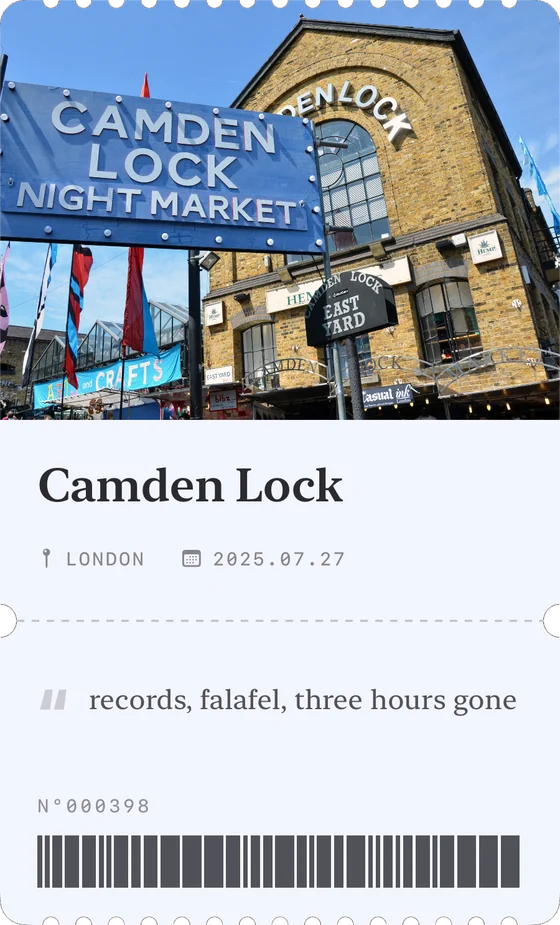
Use one ticket for one event or day, so the paperless shows sit next to the paper ones.
Finish one small batch today
Choose ten stubs. Sort them, photograph both sides, fill in the catalog line and put the originals in one labeled place. The remaining box can wait until the first ten are findable and safe.